
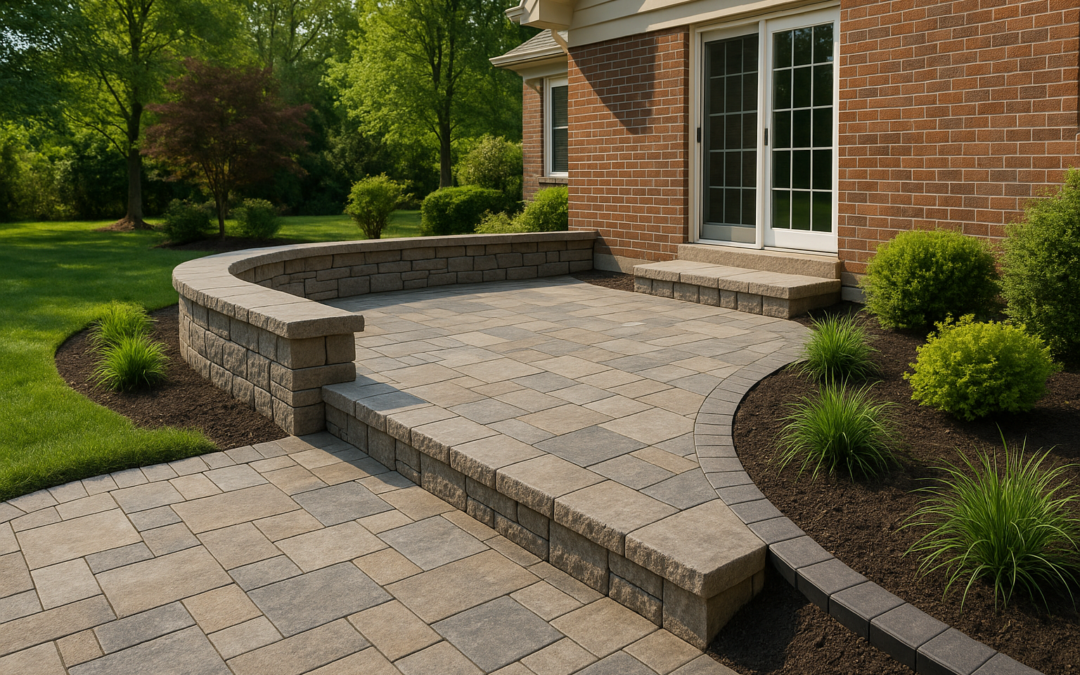
Question: What are the disadvantages of hardscape? Imagine you want a stone patio or a retaining wall for your yard in Milford, OH. Hardscapes look great, but they do have drawbacks you should know about before committing.
Site excavation and grading problems
Hardscape installations start with site excavation and grading. If excavation removes too much soil or grading is off, water can collect where you do not want it. Poor grading can also lead to uneven settling over time. Because hardscapes are permanent, correcting mistakes after the fact is more complicated than changing soft landscaping.
Base material compaction failures
A solid, compacted base is the backbone of any paver or stone surface. When base material compaction is inadequate, pavers and stones can shift, settle, or become uneven. That creates trip hazards and shortens the life of the installation. Even with good materials, poor compaction undermines long term performance.
Drainage planning concerns
Hardscapes change how water moves across a property. Without thoughtful drainage planning, you can get pooling, saturation of adjacent soils, or extra runoff toward foundations. Standing water can damage joints and subbases and increase maintenance needs. Proper drainage planning is essential to avoid these problems.
Paver or stone laying and jointing issues
Laying pavers or natural stone requires correct patterns, leveling, and proper jointing. Incorrect jointing allows movement, weed intrusion, and erosion of the joint material. Poorly laid stone can shift under traffic or freeze and thaw cycles. The visual finish is also affected when pieces are uneven or joints are inconsistent.
Retaining wall block risks
Retaining walls must be installed with proper block techniques and drainage behind the wall. Without drainage, hydrostatic pressure builds up and can lead to bulging, cracking, or collapse. Even a well-built block wall will suffer if the drainage behind it is ignored.
Concrete finishing and curing shortcomings
Concrete surfaces depend on correct finishing and curing. Rushing finishing or not allowing proper curing leads to surface scaling, cracking, and reduced durability. These problems show up as visible wear and can be difficult to repair without significant work.
The permanence factor
Hardscape is durable, but it is also permanent. Once you commit to stone, pavers, or concrete, changing layout or materials becomes a larger project. That permanence means careful planning up front is critical for long term satisfaction.
If you are in Milford, OH and want a hardscape that avoids these disadvantages, Straight Line Landscaping can help with thorough site excavation and grading, base material compaction, drainage planning, proper paver or stone laying and jointing, correct retaining wall block installation with drainage, and concrete finishing and curing. Call Straight Line Landscaping at (513) 702-1543 or visit straightlinelandscapingcincinnati.com for a free quote.